Posted by: Guest | 14 Comments
As a multicultural and biracial familia, I was pretty clear about wanting to raise a bilingual child. Ah yes! It would be simple! I would speak to our child in Spanish and my husband would speak to him in English. Sound familiar? Yes, we were going to use the OPOL (One Parent One Language) method. However, things are not always as easy as they seem, right? You see, I had the desire but not a plan. I fell into the comfortRead More ...
Posted by: Ana Flores | 8 Comments
We all know that once we committed to raising bilingual kids, we embarked in a journey that is not always as black and white as it may seem. You may have chosen the best method of raising children in two or more languages that works for your family, or maybe you found an excellent dual immersion program that can provide much of the necessary input. In any case, there are a few things to keep in mind across the board thatRead More ...
Posted by: Ana Flores | 6 Comments
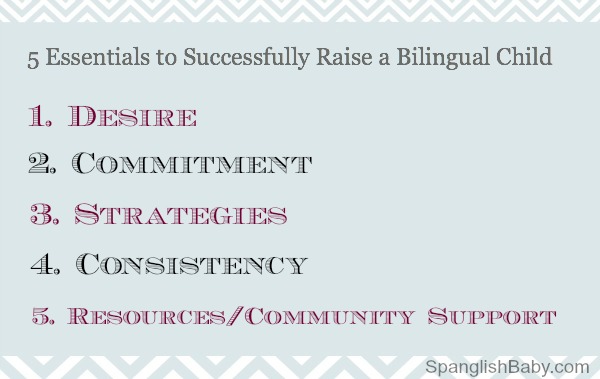
Do you have what it takes to raise a bilingual child? Pretty bold statement, huh? But the reality is that many parents make the decision to not teach their child a second language because they don’t believe they’re capable of doing it or they feel don’t have the resources they need. It could be that they feel that: they are not fluent enough in the second language their partner or family doesn’t support them not enough people around them thatRead More ...
Posted by: Ana Flores | 11 Comments
Over the weekend, my husband and I had a freelance television production gig and we got to meet a pretty neat Mexican family. The story they shared with us for the TV program we were working for has nothing to do with bilingualism, but I had to conduct all the interviews in Spanish and I must say I was very impressed by how well it was spoken by the children in the family. What surprised me the most is thatRead More ...
Posted by: Ana Flores | 31 Comments
In the lasts months I´ve been buried in all types of research and studies regarding bilinguals because of all the material I needed for the book we´re writing. Not that I need to be any more convinced about raising my daughter bilingually, it´s just fascinating to read about studies that basically take pictures of the brain, called neuroimaging, to clearly map out how the brains of bilinguals are different from monolinguals. They say a picture tells a thousand words, andRead More ...